Hearing clinic software guide
Customer management, appointments and fitting records, inventory and orders, HQ reporting — what hearing-care software should cover, and how to evaluate it.
Four layers
Hearing-care software covers four jobs
Vendors name them differently, but every hearing clinic does these four jobs every day.
Customer relationship management
One record per customer: contact details, visits, purchases, the next booking and who to call next.
- Look up customers across stores
- Follow-ups and reminders
- LINE / SMS notifications
Clinic & practice management
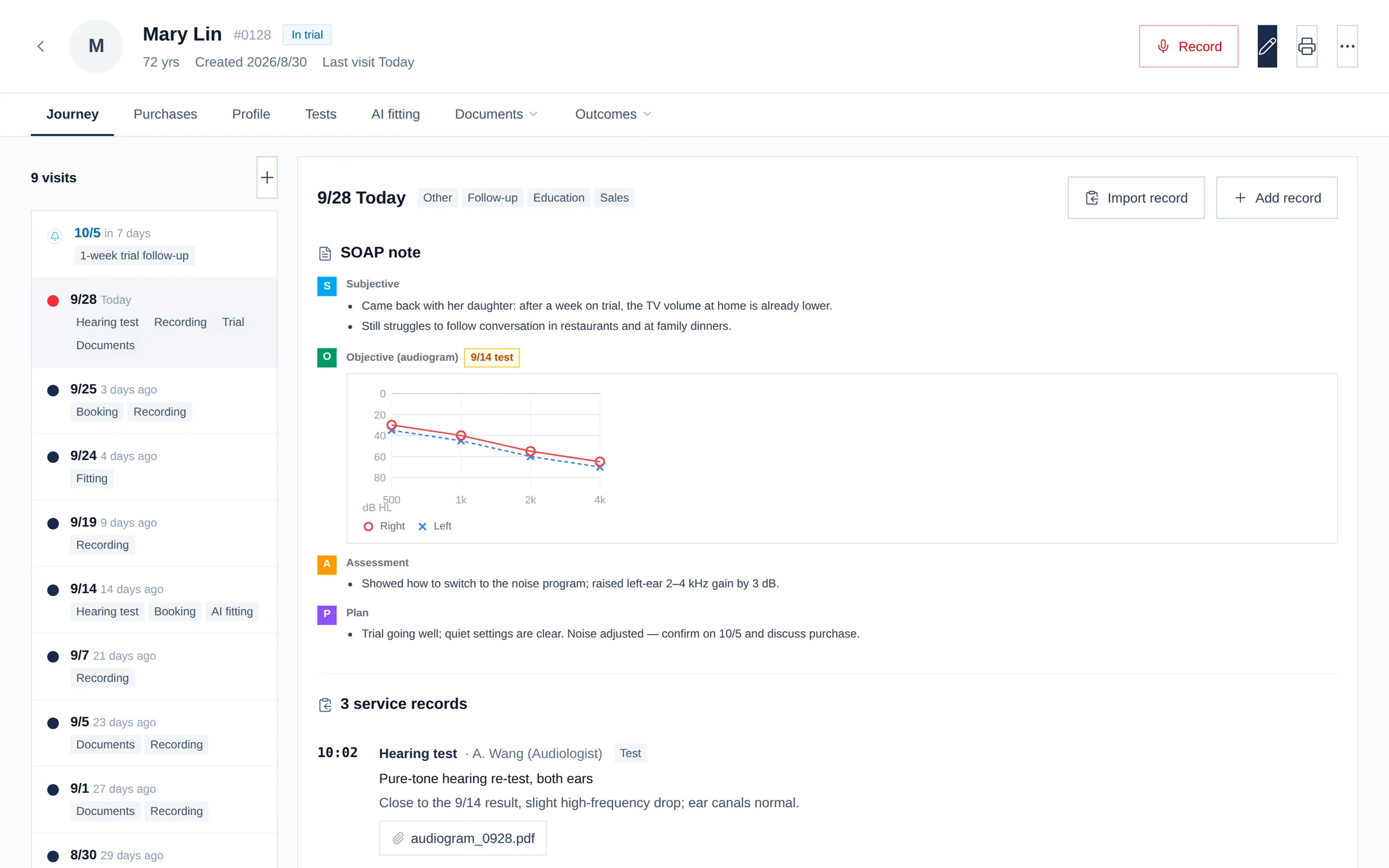
The clinical side of each visit: appointments, audiograms and tests, SOAP notes, fittings and service records.
- Bookings by store and by staff
- Audiograms and test history
- Consent records
Inventory, orders & serials
Products, per-ear serials, demo devices, purchase orders and arrivals — a recommendation only helps if the device is in stock.
- Live stock per store
- Demo-device loans and returns
- Order and delivery status
HQ reporting
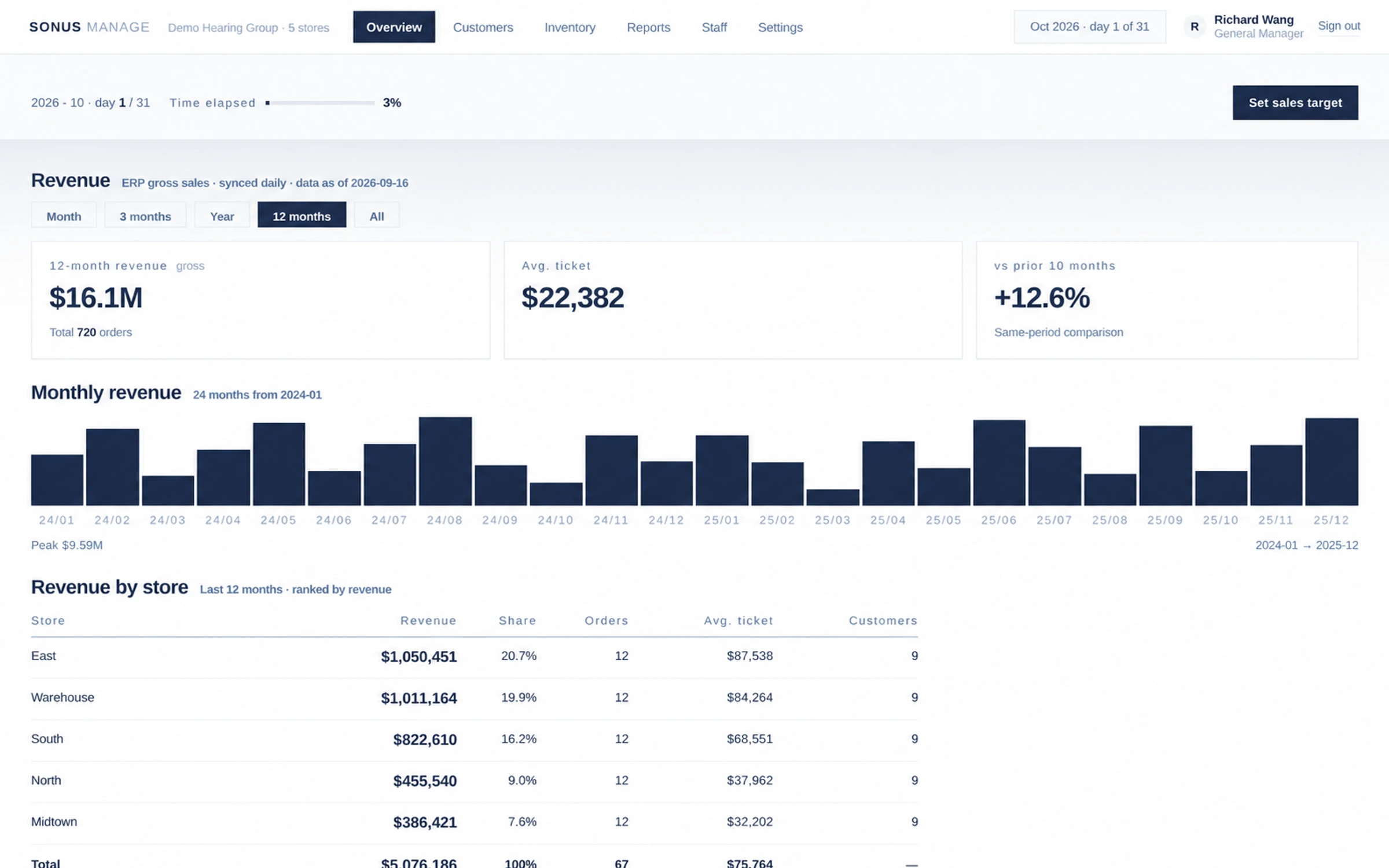
A chain's HQ needs cross-store numbers updated daily, not spreadsheets compiled at month-end.
- Revenue and average ticket
- Trial conversion and follow-up completion
- Store ranking and targets
What generic tools miss
Generic software remembers contacts, not hearing care
Evaluation checklist
Ten questions to ask before you choose
- 01Is a customer the same record in every store?
- 02Can audiograms be entered or imported, with every past test kept?
- 03Can trial loans, checkpoints and returns be tracked?
- 04Are stock and serials connected to recommendations and orders?
- 05Do follow-ups land in a to-do list, with overdue items visible?
- 06Can HQ see cross-store numbers every day?
- 07Is access role-based, and is every access logged?
- 08Where is the data stored, and under which privacy law?
- 09Does it connect to Noah and your existing ERP / POS?
- 10How is rollout phased — can you pilot one or two stores first?
SONUS SYSTEM
Stores run SONUS AI™, HQ runs SONUS MANAGE™
CRM, practice management and inventory live in the stores; cross-store reporting lives at HQ. Both share one dataset.
Further reading: Operating metrics a chain HQ should watch · Data-readiness checklist
FAQ
Common questions
Operations software for hearing clinics and hearing-aid stores. It covers customer relationship management (CRM), appointments and test records (practice management, PMS), inventory and orders (ERP), and cross-store reporting for chain headquarters.
CRM manages customer relationships and follow-ups; a practice management system (PMS) handles appointments, audiograms and notes for each visit; ERP handles products, serials, stock and orders. Hearing care needs all three on one customer record.
It can store contacts, but it usually lacks what hearing care needs — audiograms, trial periods, per-ear device serials, follow-up cadence and consent records — so teams end up patching it with spreadsheets.
Yes. You can start with one store and carry the same workflow and data to new stores as you grow.
Yes. SEER SONUS supports Noah audiology data integration and connects to existing ERP / CRM, single sign-on, LINE and a standard API.
See it on your own workflow
A 30-minute demo walked through on how your stores actually work.